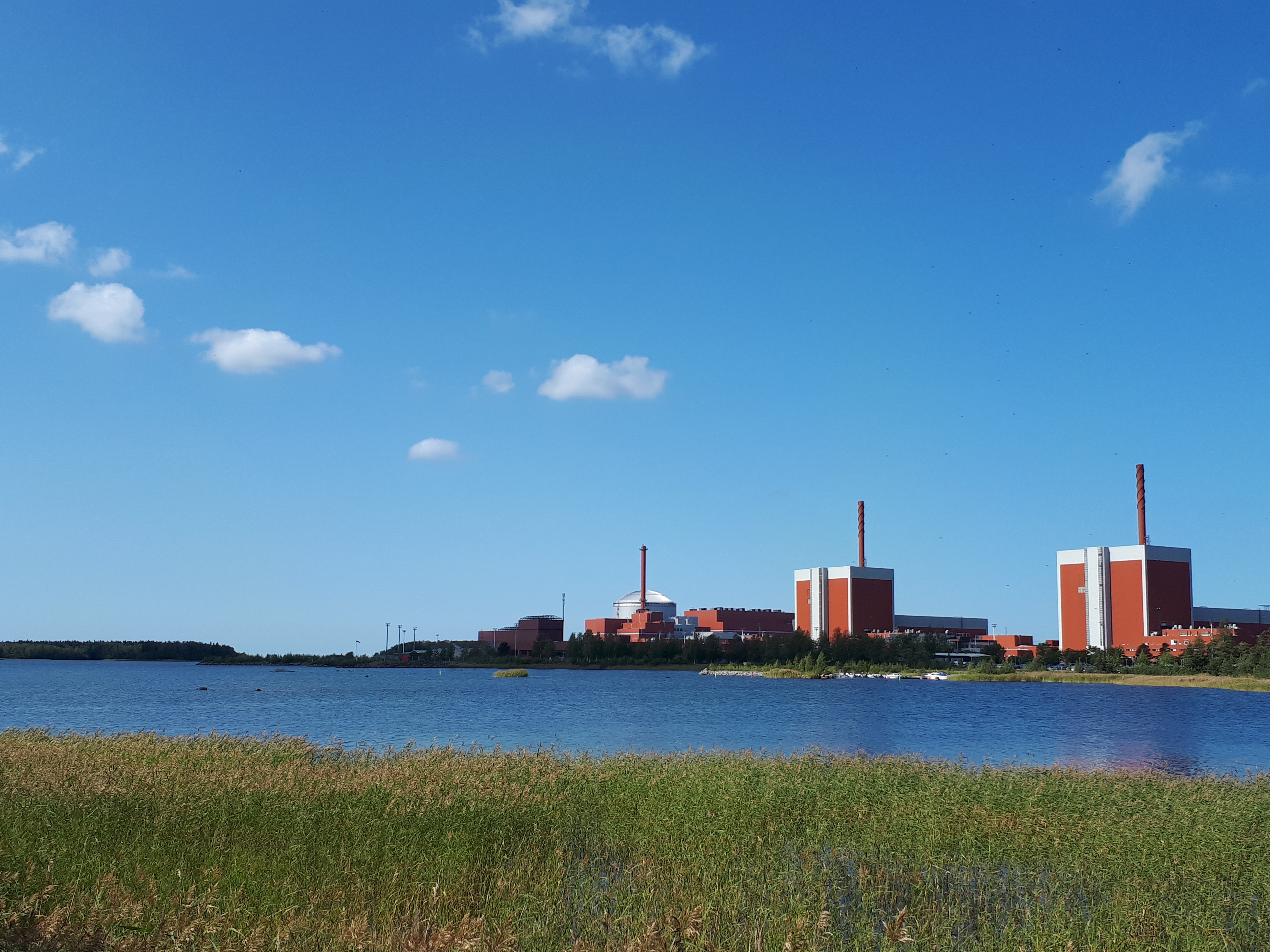

Inspections at the Loviisa nuclear power plant
STUK carries out inspections to oversee the operation and use of the Loviisa nuclear power plant. The periodic inspection programme covers safety management, main operational processes, procedures and technical acceptability of systems.
STUK draws up a plan for the inspection, setting out the subject of the inspection and any preparatory actions required of the licence holder. The result of the inspection and the resulting requirements are set out in the inspection report.
Periodic inspections
Below are summaries of the inspections carried out by STUK in year 2025 in accordance with the periodic inspection programme for the Loviisa nuclear power plant.
| Periodic inspection program | Inspection carried out |
|---|---|
| I&C technology | |
| Human factors engineering in design | 12–14 March 2025 |
| Disposal facilities | |
| Chemistry | 3–4 June 2025 |
| Plant maintenance | 26–27 May 2025 |
| Realisation of undefined OLC repair times | 22 January 2025 |
| Organisational factors | |
| Utilisation of the PRA | 2 and 4 June 2025 |
| Electrical engineering | 29–30 October 2025 |
| Radiation protection | 8–9 April 2025 |
| Nuclear security – information security | 23–24 April 2025 |
| Safety functions | 23–24 April 2025 |
| Emergency response arrangements | 1–2 April 2025 |
| Annual outage | 17 August – 3 October 2025 |
| Nuclear safeguards | 28–29 April 2025 |
Periodic inspections in 2024
Summaries of the reports of the operational inspections in 2024 are found in STUK’s annual report for regulatory oversight of nuclear safety (chapters 1.1.5 and 1.2.5).
Annual outage 17 August – 3 October 2025
The inspection of Olkiluoto units 1 and 2 concerning the 2025 annual outage focused on assessing the activities and procedures of TVO and subcontractors during the annual outage. Supervision was targeted at areas such as user safety, mechanical equipment, electrical engineering, automation technology, and radiation protection. Inspections for the 2025 annual outage covered the implementation of control room personnel shift handovers, the observation of seismic interaction in design, and the performance of fuel leak detection.
The most significant observations made during the inspection concerned the procedures for control room personnel shift handovers and the guidelines on the observation of seismic interaction.
Based on STUK’s observations, during the annual outage, the shift handover procedures of control room personnel differed in part from Fortum’s guidelines in terms such things as reporting and information exchange. STUK issued a requirement that Fortum assess how shift handover procedures of control room personnel during the annual outage corresponded to the procedures outlined in guidelines and the expectations and requirements related to the shift handovers and to determine the necessary corrective measures.
During the inspection it was observed that Fortum observed seismic interaction in the design of devices and systems, but it was not possible to verify the measures from designs or other materials. It was noted that Fortum lacks guidelines to support design activities to ensure the systematic processing of seismic interaction and uniform reporting methods. STUK imposed a requirement for Fortum to develop guidelines on the topic.
On the basis of the inspection, Fortum’s operations during annual outage were controlled and safety aspects were observed appropriately.
Electrical engineering, 29–30 October 2025
The topics covered by the inspection included the current status of electrical maintenance and electrical design in organisations, the mounting of plug-in relays, the over-frequency protection of plants, the guidelines and procedures for diesel tests carried out during the annual outage, and the validation status of electrical equipment.
It was noted that the resources for the maintenance of electrical engineering have remained at the same level as in recent years. Fortum has been able to recruit new experts in place of those who have retired well in advance, and this has allowed tacit knowledge to be passed on to new people. Fortum has identified resource challenges in the quality control (QC) and design of electrical engineering. STUK will continue to monitor the development of the resource situation in these organisational areas.
The Loviisa power plant uses several types of plug-in relays. One type of thermal relay with a plug-in has caused several faults at the plant as the relay has become detached from its mounting. Relays have fallen from their mounting due to ageing, as the plastic fastening claws that lock the relay in place loosen when they age. Fortum has started planning the renewal of these relays, which STUK welcomes. STUK issued a requirement that Fortum must map the dimensioning of installation and different safety ratings of this type of plug-in relay at the Loviisa power plant.
The inspection covered overvoltage protection at the Loviisa power plant and the related design principles and requirements. Fortum is currently conducting studies on this topic. STUK will verify the results of the study during the next electrical engineering inspection.
During the annual outage, STUK supervised the operational testing of emergency diesel generators at the Loviisa power plant. The generators passed testing requirements, but some ambiguities were identified in the testing guidelines. During the inspection, Fortum reported that it had identified development needs in the testing guidelines. According to Fortum, the guidelines will be updated in accordance with the normal update cycle.
The inspection included an examination of the validation of the electrical equipment at the Loviisa power plant. During the inspection, it was noted that the validation criteria for several electrical engineering were unrealised. Even so, Fortum stated that this has not affected the repair of faults, as validated spare parts have been available in the warehouse whenever necessary. The validation of electrical equipment is reviewed and prioritised once a year. In addition, during the operating period, steps are taken where necessary if urgent validation needs arise.
As a summary of the inspection, STUK notes that the electrical engineering functions at the Loviisa power plant comply with regulations. STUK imposed one requirement concerning the dimensioning of installation and safety classification of plug-in relays.
Utilisation of the PRA, 2 June and 4 June 2025
The inspection focused on the preparation of the nuclear power plant’s Probabilistic Risk Assessment (PRA) and the procedures related to its application as well as the utilisation of PRA in the safety management of the nuclear power plant. At Loviisa 1 and 2 and the spent fuel storage, the inspection covered the following:
- Status of PRA models and applications
- Extensions and updates under preparation and their schedules
- Organisation, resources, guidelines related to PRA preparation
- Timeliness of external threat assessment
- The role of PRA in plant safety improvements.
Based on the inspection, there have been no significant changes in Fortum’s PRA resources, and no comments were given on personnel competence management. The PRA guidelines are up to date, the PRA has been developed as planned, and the PRA is used in a versatile manner to support safety management. The update of the seismic PRA will continue at least in 2025, and studies on other external threats are under way, of which strong winds may become an increasingly significant phenomenon. Fortum does not see the risk of oil spills as significant despite recent changes in the Gulf of Finland’s conditions, as the old PRA analysis was conservative. The seawater-independent cooling towers introduced in 2015 have also significantly reduced the significance of the oil spill risk.
The PRA is used in many ways in the design and evaluation of plant safety improvements. In recent years, there have been few purely PRA-based improvements, but improvements may have been implemented in connection with other plant modification projects, in which case PRA experts are involved in the early stages of the projects and can influence planning. Otherwise, the way in which a PRA-based plant modification proceeds will depend on the extent of the change and how it is detected. The current PRA guidelines do not fully describe the actual range of alternative procedures. STUK considers the systematisation of procedures to be useful.
Based on the inspection, Fortum’s procedures for utilising PRA comply with set regulations. STUK issued no requirements based on the inspection findings.
Human factor engineering in design, 3–4 June 2025
The inspection looked into how human factors engineering (HFE) was taken into consideration in design activities.
In 2023, Fortum prepared an HFE programme. The expectation level set by this programme must be integrated into Fortum’s existing design and plant modification implementation procedures. This work has already been carried out, and the HFE programme’s approaches will be applied to new plant modifications. There is still limited experience of application.
Based on the inspection, Fortum has the resources and competence for HFE tasks, but there is a need to examine the more extensive development of the organisation’s competence and reporting on HFE activities (including the assessment of the current state of the plant from the HFE perspectives). STUK issued one requirement to the aforementioned matters.
Plant maintenance, 26–27 May 2025
The aim of the inspection was to verify that the licensee will ensure the functional capacity of the Loviisa 1 and 2 units in the short and long term. The selected inspection topics were used to assess that the resources and functions related to condition monitoring and maintenance as well as the instructions and tasks related to these were adequate to ensure the safe use of the plant units in design-based operating and environmental conditions.
The inspection verified, such things as, the maintenance procedure of the institution database, the adequacy of resources for ageing management and quality control, and the long-term planning of annual maintenance. In addition, assessments and reports related to the usability and maintenance of the residual heat removal (RHR) system and the backup RHR system used for residual heat removal completed.
Fortum’s maintenance and ageing management procedures and resources were found to comply with set regulations. The condition of the residual heat removal systems was found to be good during the inspection, but attention should be paid to the management of spare parts with regard to some obsolete spare parts items.
STUK issued no requirements on the basis of the inspection.
Emergency response arrangements, 1–2 April 2025
The aspects verified in the inspection focusing on emergency response arrangements included the situation of training provided for the emergency response organisation, automated environmental radiological monitoring, meteorological measurements and procedures for preparing dispersion forecasts. The equipment and arrangements at Keilahti Emergency Response Centre were also verified in connection with the inspection.
The inspection found that Fortum has developed the emergency response activities actively and in smooth cooperation with the authorities. Fortum’s emergency arrangements were found to comply with the company’s plans and meet STUK’s requirements. STUK issued one requirement based on the inspection findings that concerned the response time of radiation safety experts assigned to the emergency response organisation in emergency situations. STUK required that Fortum update the relevant instructions, ensuring that the planned response time can be reliably achieved.
Radiation protection, 8–9 April 2025
The radiation protection inspection conducted in 2025 focused on the dosimetry service at Loviisa power plant and on measuring workers' radiation doses.
The inspection included a pre-announced test conducted by STUK, in which a small number of dosimeters were exposed to different radiation doses in STUK’s metrology laboratory. The dose determinations carried out by Loviisa dosimetry service met the criteria set for the test.
Based on the inspection findings, Fortum’s dosimetry service is compliant with the statutes, and workers' radiation doses are determined to a high standard. STUK issued one requirement based on the inspection findings. An internal organisational change in radiation protection at Loviisa power plant took place in March 2025, in connection with which some of the persons responsible for the dosimetry service were replaced. Fortum was required to describe the changes to the dosimetry service organisation and submit them to STUK for information.
Safety functions, 23–24 April 2025
The inspection of safety functions had a particular focus on the containment building and serious accident management. On this inspection, the containment buildings' hydrogen management systems, the spray system outside the containment building and the electrical systems needed to manage serious accidents were examined.
The inspection found that the serious accident management systems are compliant with the requirements. The inspection discovered no significant shortcomings in the instructions, resources or procedures for operating experience feedback relating to them. STUK issued one requirement based on the inspection findings requiring Fortum to investigate the testing procedure of the containment building spray system after heat exchanger service.
Information security, 23–24 April 2025
The inspection comprised an independent assessment of Loviisa power plant’s information security management system, information security risk management and information security management in supplier relations and supply chains.
The inspection found that information security management at Loviisa power plant is appropriate and compliant with the applicable statutes. STUK issued no requirements based on the inspection findings.
Nuclear safeguards, 28–29 April 2025
STUK’s inspection focused on the nuclear safeguards system at Fortum’s Loviisa power plant to determine how Fortum fulfils its nuclear safeguard obligations. The main topic of the inspection was Fortum’s procedures for dismantling other nuclear material and official notifications relating to it, as well as procedures associated with IAEA and Euratom monitoring equipment and control seals at the plant.
The inspection found that Fortum's procedures regarding dismantling notifications and monitoring equipment are appropriate. STUK paid attention to recent improvement in communication between teams as well as waste management and storage. According to STUK’s observations, marking of the monitoring equipment at the plant could be improved, and obstacles hindering monitoring equipment operation could be identified better.
STUK issued one requirement based on the inspection findings, requiring Fortum to update the basic technical data of the plant with descriptions of difficult-to-reach storage locations.
Realisation of undefined OLC repair times, 22 January 2025
The inspection assessed the monitoring and implementation of work that requires operational limits at the Loviisa nuclear power plant. The inspection focussed especially on so-called X work, referring to work for which no limit period has been specified in the Operational Limits and Conditions (OLC).
The inspection found that Fortum has comprehensive procedures for monitoring X work. The work and their risk significance are regularly assessed in various meetings and reports. In the job management system, the X work classification is also used for work not within the scope of OLC. In STUK’s view, it would be better to restrict X work to only refer to work requiring operational limits specified in the OLC and establish another classification for non-OLC work. STUK presented an observation on the subject in the inspection report.
Based on the indicators presented by Fortum, the duration of work requiring operational limits in accordance with the permitted 3-day repair period has been significantly reduced in recent years. However, there are no corresponding indicators for other limit categories, which makes it difficult to monitor their duration. STUK estimates that creating such indicators could further improve operations and ensure the coverage of positive development.
In assessing the risk caused by work that requires operational limits, Fortum uses different priority measures to prioritise critical work. X work is monitored in the same way as other work requiring operational limits, and the risk analysis covers their effects. STUK estimates that a more detailed analysis of the distribution of X work into different systems could help further develop practices.
The inspection did not result in any requirements presented by STUK.
Chemistry, 12–14 March 2025
The inspection focused on monitoring the water chemistry conditions and activity levels of the primary and secondary circuits of units 1 and 2 of the Loviisa nuclear power plant. The inspection supervised the appropriateness of the laboratory equipment and facilities used for monitoring. The inspection included a verification of sampling at the plant and reviewed the chemistry organisation.
Based on the inspection, the chemistry organisation is able to adequately respond to the plant’s analysis needs and required development tasks. The laboratory located in the controlled area has been extended, but the deployment of the facilities is still ongoing. STUK made an observation regarding the qualification requirements of the substitute in charge of the safety function of the chemistry area described in the plant’s rules of procedure, taking into account in particular water chemistry control competence.
The inspection did not result in any requirements presented by STUK.