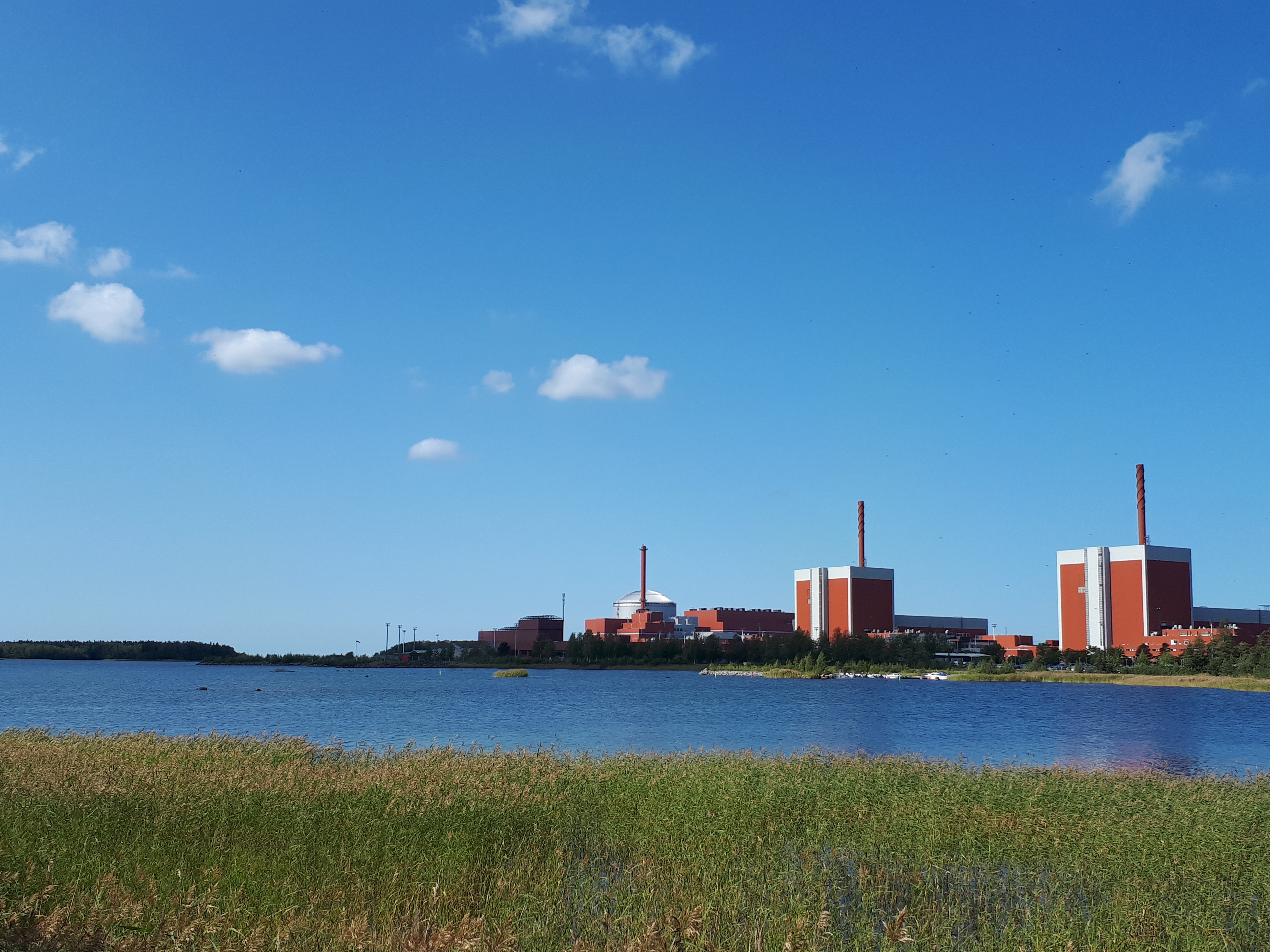

Inspections at the Olkiluoto nuclear power plant
STUK carries out inspections to oversee the operation and use of the Olkiluoto nuclear power plant. The periodic inspection programme covers safety management, main operational processes, procedures and technical acceptability of systems.
STUK draws up a plan for the inspection, setting out the subject of the inspection and any preparatory actions required of the licence holder. The result of the inspection and the resulting requirements are set out in the inspection report.
Periodic inspections
Below are summaries of the inspections carried out by STUK in year 2026 in accordance with the periodic inspection programme for the Olkiluoto nuclear power plant.
| Periodic inspection program | Inspection carried out |
|---|---|
| Radiation protection | 27–28 January 2026 |
| Chemistry | 3–4 February 2026 |
| Steering and supervision of contractor operations, 10–11 February 2026 | 10–11 February 2026 |
| Change management at OL3 | 17–18 March 2026 |
| Nuclear security | |
| Mechanical technology | |
| Structures and buildings | |
| Plant maintenance | |
| Disposal facilities | |
| Emergency response arrangements | |
| Human factors engineering in design | |
| Utilisation of the PRA | |
| Safety functions OL1/OL2 and OL3 | |
| Nuclear safeguards | |
| Organisational factors |
Change management at OL3, 17–18 March 2026
The inspection included an assessment of the management of modifications and related procedures at the Olkiluoto 3 unit (OL3). On the basis of the inspection, it was found that OL3 no longer applies the procedures used during the project phase, and modifications are implemented in accordance with TVO’s instructions.
The upper-level instructions for change management are common to all Olkiluoto plant units OL1–OL3. In addition, OL3 has plant-specific instructions and manuals in its use. The inspection found that temporary changes are mainly carried out in small-scale and limited-impact modifications, for which there is an immediate need to ensure safety or usability. The assessment of the impacts of modifications management process for modifications, and on the basis of the inspection, this assessment is carried out at an adequate level.
The inspection also addressed development plans for management of modifications. TVO is currently developing a management process for modifications, and new practices are expected to be introduced in spring 2026. Based on the inspection, the management of changes at OL3 meets the requirements laid down in regulations. STUK monitors the progress of TVO’s development work falling under its supervision.
Radiation protection, 27–28 January 2026
In 2026, the inspection programme for radiation protection usage audited radiation protection-related operational activities, the application of radiation protection guidelines in various sectors as well as the up-to-datedness of such guidelines. Radiation measurements were included in the audit as well. The audit covered all plant units.
Radiation protection was implemented well in 2025, which is reflected in employees’ exposure to record low radiation doses. TVO is constantly developing its expertise and readiness in radiation measurement.
The audit resulted in two requirements for ensuring up-to-date radiation protection guidelines in control rooms as well as the functionality of local displays of fixed radiation measurement equipment.
Chemistry, 3–4 April 2026
The 2026 chemistry assessed and validated the appropriateness of equipment for maintaining and monitoring the OL1/2 boiling water reactor coolant, the primary and secondary circuit of the OL3 pressurised water reactor as well as the water-chemical conditions in the OL1/2/3 fuel pools, and the accuracy of analysis methods as well as the up-to-datedness of guidelines.
The audit validated the monitoring of changes in chemical conditions and activity levels. The audit found that the monitoring of changes in water chemistry and activity levels is appropriate: observations prompted reactions, and efforts were made to determine the cause of any changes. Assessing the impacts of changes in new process chemicals and filter materials, sampling points and chemical entry points can be developed in a more proactive and better documented direction.
STUK did not issue any requirements on the basis of the inspection. Procedures in areas covered by the audit were primarily in compliance with the requirements. While the safety report of the OL3 laboratory was not up to date with YVL B.1, TVO has begun its update, to be completed in early 2026.
Steering and supervision of contractor operations, 10–11 February 2026
The audit focused on the steering and supervision of TVO’s contractors. TVO operations make extensive use of contractors. The audit inspected the control procedures for safety-related changes and maintenance work. In particular, it examined how TVO has defined the supervision of contractors and how this reflects risk management, how TVO supervision reacts to observations made at different stages, and how current operating methods and systems enable the development of supervision for similar projects and work in the future.
The audit found that TVO has established procedures and responsibilities for steering and supervising contractor operations. TVO is developing the steering and supervision of contractors to make it more systematic, especially in regard to maintenance contractors. TVO has introduced procedures that support a stronger situational picture of large contractors, including the Key Supplier team. In addition, attention has also been paid to documenting lessons learned from the supervision of contractors in projects. Previously, supervision in the early stages of projects often leaned on the skills of individuals, causing greater variations in supervision. TVO is developing more systematic monitoring of project contractors and the documenting of lessons learned. STUK approves of this trend.
The audit found that the steering and supervision of TVO’s contractors meets regulatory requirements. STUK is monitoring the progress of TVO’s development work falling under its supervision.
Inspections in 2025
Emergency response arrangements, 2–3 September 2025
The inspection of emergency response arrangements covered the nuclear power plant’s emergency response arrangements, instructions, facilities, and training. It reviewed the experiences gained during the past year in emergency response activities as well as experiences and feedback on emergency response exercises. The inspection area also included emergency response equipment, including automated radiation monitoring and meteorological measurements of the environment and preparation of dispersion forecasts.
The development of Olkiluoto’s emergency response has been steadfast, and it seems that it will continue in this manner. As regards the launch of Posiva’s emergency response activities, there are still some tasks that have yet to be completed, such as the placement of protective equipment, but these will not affect Posiva’s emergency response exercise. The inspection's section on emergency response equipment focused in particular on the renewal of the external radiation monitoring network and the weather measurement system. Both systems serve both TVO and Posiva’s emergency response activities. The renewal of both systems is now in the final stages of practical implementation.
Based on the inspection, TVO’s emergency response arrangements are at the level required by set regulations. STUK issued one requirement based on the inspection findings. STUK is requiring more detailed information on the capacity of the verification inspections of the weather measurement station.
Operating experience 3 December 2025
The inspection focused on external user experience activities, i.e. the processing of events and operating experiences other than Olkiluoto. The inspection focused on the processes and organisation of the power plant’s operating experience activities and the related guidelines and procedures.
Based on the inspection, the Radiation and Nuclear Safety Authority found that TVO’s operations are well-established in terms of handling the external operating experiences of the OL1/OL2 units. The collection and processing of external operating experiences related to the OL3 unit is still in the development phase, and based on the inspection, STUK issued a requirement that the operations be systematically traceable.
On the basis of the inspection, STUK concluded that sufficient resources are available for external operating experience activities, but there are variations in the commitment of other offices in TVO’s organisation that may cause delays in processing. STUK required that it be ensured that exceptional nuclear power plant events and operating experiences be processed in a timely manner with no delay.
Power plant waste, 11–12 November 2025
STUK uses the inspection to assess nuclear waste management at all Olkiluoto nuclear power plant units. The areas addressed in the inspection included the planning of nuclear waste management measures as a whole, the adequacy and competence of nuclear waste management personnel, and whether the guidelines were up to date, as well as the development and noteworthy events that have taken place after the previous inspection. The plant tour focused on waste treatment and storage facilities in the OL1 and OL2 units.
Based on the inspection, the management of power plant waste meets the set regulations. TVO’s activities and organisation with regard to nuclear waste management have continued to evolve, and the resources available are sufficient. The instructions are mainly up-to-date, but the documents in the final safety analysis report (FSAR) for OL3 are for the operating licence period. TVO will update the FSAR in connection with planned modifications and carry out a more extensive review in this context. TVO has improved the promotion of its development projects, but the management of modifications still requires attention. Compared to recent years, radiation doses caused by waste management work have remained at the same acceptable level. TVO has a good emergency response and is further developing preparedness for when faults arise in the treatment of OL3 wastewater. In addition, TVO is implementing a pilot project on the incineration of waste exempt from supervision - TVO has yet to make a decision on its continuation after the pilot phase.
Organisational activities, 25–26 November 2025
TVO is facing a new situation where the use of OL3 has begun and Posiva is waiting for an operating licence, and the energy market is undergoing a transformation. The aim of the organisation’s activities in the inspection was to verify that TVO’s management had a clear situational picture and that its wording was clear compared to the challenges that emerged, and to ensure the clarity of TVO’s measures. In addition, the inspection covered the status of TVO’s nuclear safety function and the independent supervision of safety, as well as indicators related to safety and the action plan for safety culture. Many of the areas address in the inspection are currently under development.
The owner-value programmes introduced by TVO in 2025, the aim of which is to improve safety, usability, and profitability, are TVO's way of implementing TVO's strategy. Examples of development projects in the ownership value programmes, which are important from the perspective of STUK, include ongoing development measures related to ageing management and spare parts management as well as projects related to the Safety at Olkiluoto programme. The inspection addressed the process of programme development, implementation, and management, but not their detailed content, as TVO has yet to fully complete the process of defining them. The programmes provide a good framework for the management and monitoring of development issues. STUK monitors the progress of development projects in connection with other supervision.
During the inspection, the formation of TVO’s situational picture was examined on the basis of evaluation reports. On the basis of the inspection, STUK concluded that the evaluations were carried out well, but not all the recommendations in the reports have been processed in a traceable manner. STUK is requiring that TVO develop the process of continuously improving the organisation’s operations. TVO has integrated the development of safety culture into other development of other operations. This is a good thing, but the concise summing up of the change needs affecting the essential features of the company culture (values, perceptions, assumptions) and the planning of development measures may be weakened. On the basis of the inspection, STUK will require that TVO provide additional information on development needs identified in safety culture and the status of the improvement measures.
TVO is developing the measurement of its management system in an ambitious manner. TVO has various indicators related to safety status and safety-related objectives, which have been used by both line organisations and independent safety oversight in the monitoring and management of the situational picture. STUK monitors development, especially with regard to safety indicators.
Intermediate storage for spent fuel, 9–10 December 2025
The inspection included the assessment of the activities, responsibilities, and resources of the organisation participating in the use of the interim spent fuel storage facilities and whether key documents were up to date. In addition, emissions measurements, the status of modifications, and ageing management were discussed.
STUK concludes that as a rule, TVO meets the requirements set for the operation of the spent fuel storage. There have been no changes in the organisation, but according to TVO’s own observations, the operations of the spent fuel storage’s operational planning team have developed and the tasks related to the storage of spent fuel have been better scheduled and coordinated than before. The guidelines are up to date, but the general section of the Final Safety Analysis Report (FSAR) has not been updated after updates to the previous periodic safety analysis in 2016-2017. The FSAR is one of the documents that must be kept up to date, and the TVO should ensure that it is also updated between periodic safety analyses, after the periodic safety analysis has been updated in 2027–2028. STUK monitors the matter in connection with inspections.
The prioritisation of modifications was introduced at the TVO a year ago also for spent fuel storage. STUK concludes that the priority classification for planning and ongoing projects seems to be a good practice to ensure the availability of project resources. The communication of information on modifications to the spent fuel storage facility that will affect nuclear regulation to the persons in charge in TVO’s organisation is also good. In STUK’s view, nuclear material regulation is at a good level.
Based on the inspection, STUK required TVO to set target values for emissions of radioactive substances also for spent fuel storage facilities - these have now not been presented. In addition, STUK required a report on how deviations related to emission sampling will be taken into account more extensively in all units.
Annual outage 17 August – 3 October 2025
The inspection of Olkiluoto units 1 and 2 concerning the 2025 annual outage focused on assessing the activities and procedures of TVO and subcontractors during the annual outage. Supervision was targeted at areas such as user safety, mechanical equipment, electrical engineering, automation technology, and radiation protection. Inspections for the 2025 annual outage covered the implementation of control room personnel shift handovers, the observation of seismic interaction in design, and the performance of fuel leak detection.
The most significant observations made during the inspection concerned the procedures for control room personnel shift handovers and the guidelines on the observation of seismic interaction.
Safety functions units OL1/OL2, 8–9 October 2025
The inspection covered the containment building and serious accident management. The inspection focused on hydrogen management systems, hydrogen management in the reactor hall in emergency situations and the containment building function with regard to how the containment building is filled with water.
On the basis of the inspection, the status of the systems and functions in the inspection area are good. Periodic tests pursuant to operational limits and conditions (OLC) have been carried out appropriately.
During the inspection observations were made on some shortcomings in system descriptions, the transfer criteria for disruption instructions and the validation of procedure instructions, and a possible nonconformity related to the current design requirements of the containment building isolation valves. Attention was also paid to the limited orientation of any new person responsible for the system. The Radiation and Nuclear Safety Authority requested that TVO undertake corrective measures and submit relevant reports for these.
Plant maintenance, 9–10 October 2025
The inspection assessed the condition monitoring and maintenance of units OL1, OL2 and OL3. Specific topics included supports for small pipelines, temporary maintenance and storage facilities at OL3, recording of ageing phenomena in TVO’s fault reports, the operation of TVO’s fault and equipment groups, the status of the ageing management programme, the operational condition of the feedwater system and the development of Human Performance (HU) activities in maintenance.
TVO has examined the operating condition of the difficult to reach small pipe systems and their supports in OL1/OL2 on the basis of a last inspection by the Radiation and Nuclear Safety Authority and found them appropriate. In the future, the condition of small pipe systems will be monitored during the annual outage. The use of temporary solutions, especially during winter, in OL3’s maintenance and storage facilities was examined. TVO has launched a preliminary study to assess future space requirements.
TVO is developing its lifecycle management by introducing the Equipment Reliability (ER) concept. In addition, TVO has expanded the operation of the fault group established for units OL1/OL2 in 2024 to also cover OL3. The objective of the fault group is to determine the root causes of faults. The recording of ageing phenomena in connection with fault reporting has also been developed, but there is still room for improvement in the comparability of data.
The inspection covered the maintenance feed water system for units OL1/OL2 in more detail. The system is subject to active modifications, especially on valves and I&C components. The feedwater system works as designed and its maintenance is actively developed.
TVO has developed Human Performance (HU) activities, and HU issues are discussed in various training and meeting procedures. There is still room for improvement in the organisation of HU training for subcontractors.
On the basis of the inspection, TVO has carried out the maintenance of the plant in accordance with requirements, and carries out development work in several areas.
OL1/2/3 Independent supervision of operations, 6 November 2025
The inspection verified and assessed the independent supervision activities for OL1/2 and OL3.
On the basis of the inspection, the Radiation and Nuclear Safety Authority concluded that the operations are appropriate; sufficient resources and instructions as well as appropriate operating methods are in place for the independent supervision of operations. TVO has developed documentation procedures for independent supervision, and the development work is ongoing.
TVO has strengthened the independence of the function by transferring it from the Operations Department to the Safety Department. On the basis of the inspection, a requirement was presented to increase the exchange of information between independent supervision and management in order to strengthen independence.
Safety functions unit OL3, 10–11 November 2025
The 2025 Safety Functions Inspection covered the containment building and serious accident management. The inspection focused on the containment building’s hydrogen management system, the hydrogen monitoring system, and the containment building function with regard to the containment building’s filtered blow-off system.
The status of the systems and functions in the inspection area was generally in accordance with the requirements. The specificity and ageing of certain components pose challenges for maintenance.
Based on the inspection, the Radiation and Nuclear Safety Authority demanded that steps be taken to correct shortcomings in the performance and recording of periodic tests pursuant to operational limits and conditions (OLC). In addition, based on the inspection a requirement was set for updating the system data concerning the containment building’s isolation.
Management of periodic tests, 23–24 September 2025
During the inspection, measures related to the administration of periodic testing pursuant to operational limits and conditions (OLC) at units 1, 2, and 3 of the Olkiluoto nuclear power plant were verified. The inspection focused on the administration and guidelines of periodic tests as well as on the roles and responsibilities of different units (use, maintenance and others such as the safety unit, laboratory, and fire brigade) and how they support the high-quality performance of the testing.
Based on the inspection, the Radiation and Nuclear Safety Authority (STUK) found that TVO’s practices for periodic testing are at a good and effective level for all the units (OL1/2/3). Deficiencies were observed, for example, in the maintenance guidelines for Olkiluoto units 1 and 2. Most of the testing guidelines are of good quality, but there is room for improvement in some. There is also room for improvement in the management of test recordings by maintenance personnel. In the case of unit 3 at Olkiluoto, the development of the workflow management system is still partly ongoing and the tests during the annual outage are administered with temporary procedures. However, the periodic tests have mainly been carried out as required.
Based on the observations, STUK imposed a requirement for TVO to undertake development measures to ensure that the guidelines and documentation of periodic tests and the management of recordings for all periodic tests are at the required level for units 1, 2, and 3 at latest by the next annual outages. A significant share of the periodic tests is carried out during the annual outage. STUK verifies this during the supervision of the annual outage.
I&C technology, 8–10 October 2025
The inspection focused on automation technology systems, organisations, guidelines, and the utilisation of operator experiences at units 1, 2 and 3 at Olkiluoto nuclear power plant. The inspection also included the examination of the current status of the observations made during the previous inspection and found that improvements had been made. For example, guidelines and training on connectors and gaskets suitable for accident conditions have been updated due to previously detected defects in connectors.
With regard to the review of operator experiences, it was noted that the processing of events seems comprehensive and the assessments of the impacts carried out are appropriate for units 1, 2, and 3 at Olkiluoto.
Based on the inspection areas of development were determined and requirements were set for commissioning inspections of temporary alterations on unit 3 at Olkiluoto as well as for the accuracy and compliance of component configurations with a verification procedure.
Nuclear security, 18–21 March 2025
The inspection focused on the safety arrangements at the Olkiluoto nuclear power plant (OL1/OL2/OL3), including physical safety arrangements and information security. The inspection covered the security arrangements development project, exercises and incident management procedures, the results of the 2024 emergency exercise, information security risk management and the resourcing of security arrangements. The inspection included observations of the activities of the safety organisation and interviews and, in particular, the inspection targeted inspection areas related to the annual maintenance of OL3.
TVO has decided to change the security company it uses. TVO has prepared for the change with a risk assessment and the mapping of risk management measures.
Based on the inspection, previous requirements were excluded, and one new requirement was added concerning risk management procedures.
Annual outage OL3, 1 March – 29 April 2025
The inspection focused on the annual outage of TVO’s Olkiluoto 3 unit. The audit focused on assessing the safety of the plant, work permit practices and radiation protection. This year's inspection focused in particular on the containment building’s leak test.
The second annual outage of Olkiluoto 3 was carried out between 1 March and 29 April 2025. Safety-critical work carried out during the annual outage included inspections of nuclear fuel and the reactor’s primary circuit and its most important structural components.
The TVO was successful in organising the maintenance work, and the activities were deliberate and systematic. The occurred failures and other setbacks were resolved without compromising safety requirements. In STUK’s view, an adequate amount of time was reserved for the implementation and planning of the annual maintenance work, and safety was given priority. On the basis of the inspection, it was found that the TVO has developed its operations based on the experiences and lessons learned from the first annual outage.
Based on the inspection, STUK required TVO to produce an assessment on the confirmation of plant facility management procedures during the annual outage and the adequacy of procedures and instructions related to the subcontracting process. In addition, STUK issued requirements concerning compliance with the selection and classification criteria for event investigation, and control of the doors at interfaces related to radiation protection.
Fire protection 23–24 April 2025
The inspection assessed the efficiency of the fire protection arrangements at nuclear power plants and the efficiency of the power company’s operations, as well as reviewed plans for modifications to fire protection arrangements. The inspection covered the implementation of the plant fire brigade’s development programme and its impacts on the activities of the fire brigade.
The fire brigade’s operational activities have been significantly developed in recent years. The most visible changes are the transfer of the fire brigade’s shift personnel from the subcontractor to TVO, the reduction of the shift size and a change to the shift system – also affecting competence requirements, the planning and management of training. The personnel have for the most part been in favour of the changes, although it will take some time to get accustomed to the new shift system and the smaller number of personnel per shift. The introduction of the new shift system has seen the number of training sessions increase and fire chiefs have been given more responsibility for planning the training sessions.
The inspection also covered the processing of proposals for measures made by employees. Based on the results, it was found that a good percentage of proposals for measures related to fire safety are implemented.
A few observations were made during a tour of the OL2, but the overall appearance of the plant was clean.
Based on the inspection, the plant’s fire safety system meets the requirements set for it. The fire protection systems are in working order and their maintenance, inspection and testing procedures have been carried out appropriately.
Annual outage OL1/ OL2, 11 May – 24 June 2025
The inspection of the annual outage of Olkiluoto 1 and 2 in 2025 focused on assessing the activities and procedures of TVO and subcontractors during the annual maintenance. Oversight was targeted at topics such as user safety, mechanical equipment, electrical and automation technology, and radiation protection.
General topics to be inspected in 2025, included the periodic tests pursuant to Operational Limits and Conditions (OLC). STUK oversaw the performance and documentation of periodic tests in connection with other inspections. No significant shortcomings were observed in the periodic tests pursuant to OLC and their administration. With regard to the guidelines for the periodic testing of electrical systems pursuant to OLC, processing will continue in the autumn in an inspection related to the topic.
The most significant findings made during the inspection concerned the procedures for monitoring the radioactive surface contamination of the primary circuit and the response capacity of fixed radiation measurements in the reactor hall in lifting events. With regard to these findings, STUK required more detailed descriptions on the application of wipe tests and how radiation measurement can be developed in situations where a significant change in dose rate takes place in the reactor hall, as was the case on 1 June 2025: Due to a malfunction, the control rod rose too close to the water surface during the introduction of the new OL2 refuelling machine, which resulted in six workers being exposed to radiation that was higher than normal. TVO will also prepare an incident report on the matter, which STUK will process.
During the annual maintenance, loose parts got into the Olkiluoto 2 reactor as the result of two different events (as a result of a fault in the fuel charging machine and the breakdown of the reactor inspection equipment). Searching for and removing the loose parts resulted in a lot of work for TVO. During the inspection, STUK also monitored the TVO’s foreign materials exclusion (FME) solutions more extensively. TVO’s investments in development in recent years is evident at work sites and in the plant operations. Employees have adopted FME practices as part of their normal work, and TVO takes a sufficiently serious view of loose parts.
Based on the inspection, it can be concluded that the TVO’s actions during the annual maintenance are compliant with requirements and have succeeded in a safe manner and in accordance with a good safety culture.
Radiation protection, 13–14 January 2025
In 2025, the radiation protection inspection was targeted at measuring employees' radiation doses. The inspection covered all plant units (OL1&2 and OL3). The inspection was used to verify organisational matters included in the approval of the dosimetric service, such as responsibilities and access rights, operating in accordance with instructions and the equipment used in the dosimetric service. The inspection also included a test, that was announced in advance, in which a small number of dosimeters were irradiated at different radiation doses in STUK’s metrological standard laboratory. In the test, TVO met the criteria set for determining the radiation doses of dosimeters.
Based on the inspection, STUK found that TVO has procedures that enable high-quality operations in determining employees' radiation doses. One requirement was presented in the inspection, concerning the notification to STUK of changes in the organisation of the approved dosimetric service.
Personnel resources and competence (TVO–Posiva joint inspection), 27–28 February 2025
The audit focused on Posiva’s and TVO’s shared HR and competence procedures and the assessment of their adequacy as well as the identification and management of competence needs. In other words, how the procedures of both licence holders enable Posiva to have the necessary and competent resources at its disposal.
Posiva uses TVO’s resources and expertise for many functions. TVO’s personnel planning work is also carried out in a managed manner in connection with the annual planning process and budgeting. The resource needs are coordinated in the personnel planning process. STUK considers that TVO ensures that Posiva has access to the competence it needs in many different ways. However, Posiva still needs to deploy practices like the personnel planning process and ensure the competence and sufficient working hours of the various system and equipment managers. With regard to guidelines, it is important for TVO and Posiva to identify what instructions are needed for each task.
There is an established service agreement model between TVO and Posiva for reserving and procuring resources. Human resources shared by TVO and Posiva are discussed in many cooperation forums and groups. If necessary, issues related to resourcing are escalated for resolution. Based on the inspection, STUK finds that Posiva’s procedures for managing external resources seem appropriate.
STUK made several observations during the inspection, which are essential from the point of view of safety ensuring as Posiva approaches the production phase. Based on the inspection, STUK does not present any requirements. Based on the inspection, the subject areas of this inspection as they relate to personnel planning and resource requirements as well as competence development and assessment, can be considered to be at an acceptable level.