Nuclear Safety Is a ‘Common Good’ for European Citizens, Conclude Heads of the French and Finnish Nuclear Regulators
Nuclear Safety Is a ‘Common Good’ for European Citizens, Conclude Heads of the French and Finnish Nuclear Regulators
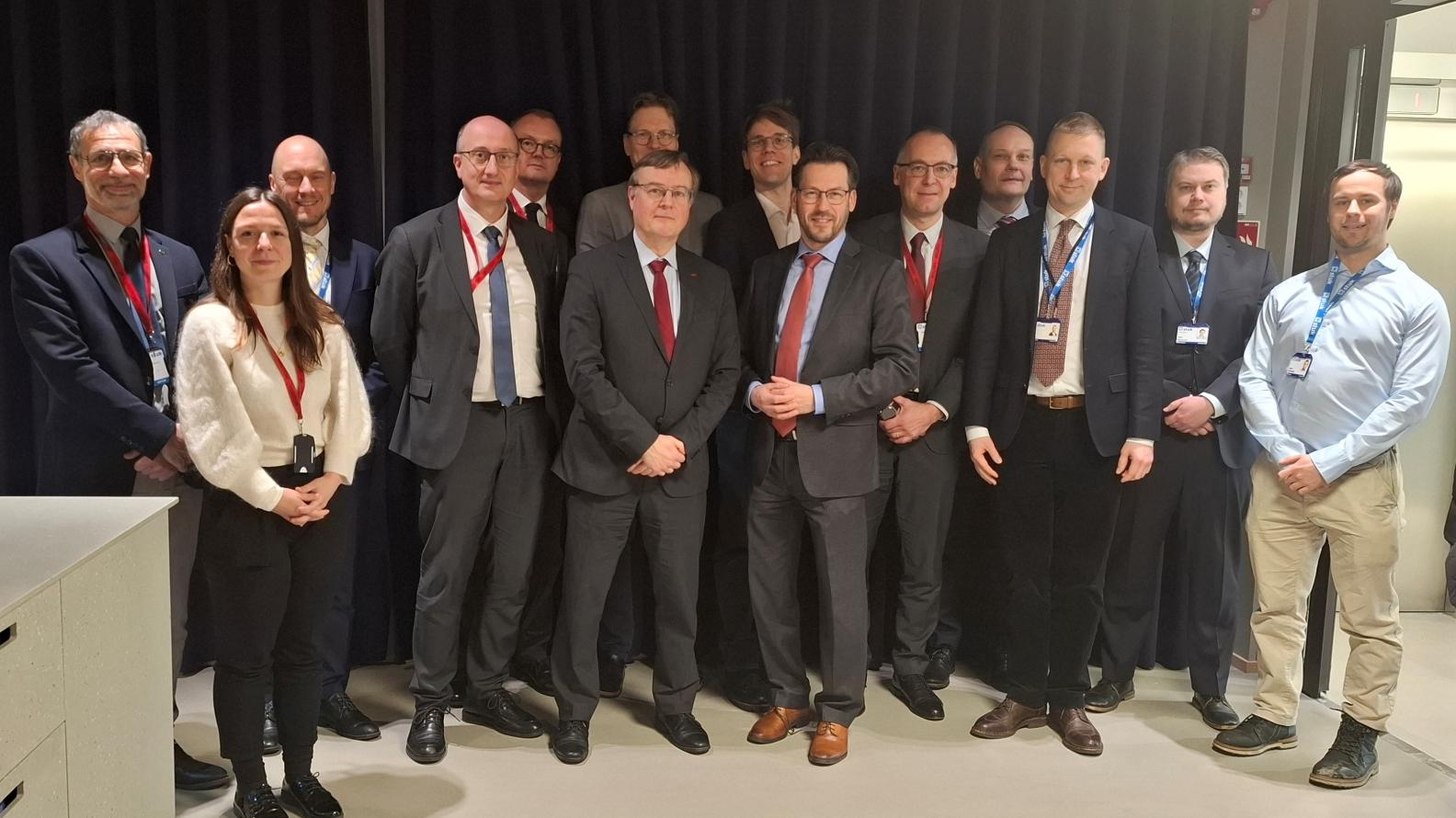
STUK and ASNR, the nuclear and radiation safety authorities in Finland and France, met for bilateral discussions in Vantaa and Olkiluoto from February 11th to February 13th.

ASNR and STUK, overseeing the safety of EPR reactors operated in both countries, have had a long standing and mutually beneficial relationship, bilateraly as well as in European networks such as WENRA and ENSREG.
During their discussions, the delegations of STUK and ASNR, led by Director General Tiippana and Chairman Abadie, have been able to exchange on technical topics linked to the safe operation of EPRs OL3 and FLA3, as well as those relating to new build projects, SMRs / AMRs (district heating, notably) and waste management. They also highlighted the role of Safety Authorities in environmental monitoring and emergency preparedness and the support they can provide in this area to national authorities.
DG Tiippana and Chairman Abadie shared views on strategic challenges for nuclear safety, today and in the future, for new builds, SMRs development and long-term operation of existing reactors. They also touched upon forward looking topics like appropriately regulating fusion facilities and nuclear maritime applications. They noted, that while countries work to develop regulatory frameworks that enable timely licensing of emerging nuclear technologies, it is essential that the fundamental principles of nuclear safety remain uncompromised.
They noted that cooperation between authorities in Finland and France is smooth and benefits both parties. For example, ASNR has unique experience in regulating fusion facilities, from which Finland can learn. Conversely, Finland’s expertise in the oversight of world first spent fuel repository is yet unparalleled.
In their discussions they highlighted that nuclear safety, a "common good" for all European citizens and beyond, shall be given the highest priority. This assessment is specially reinforced today when considering the situation in Ukraine, in the context of the aggression war led by Russia.
Chairman Abadie and DG Tiippana further discussed challenges safety authorities face today, to improve regulatory effectiveness and efficiency, to take into account innovation and to better rely on objective based safety. Concerning the difficult challenge of complexity in nuclear, primarily a responsibility of operators, Safety Authorities could help by developing goal oriented regulatory frameworks and proportionate safety approaches.
DG Tiippana and Chairman Abadie agreed that Safety Authorities could help derisking projects by establishing early dialogue opportunities and stabilizing referentials.
To conclude, they agreed that they should further work together to demonstrate that safety, essential to protect people and the environment, can also contribute to industrial performance.